David Freedman
Author and Journalist David H. Freedman


Home

About me

A Perfect Mess

Other Books

Articles

Archives

Contact


Brain Boosters

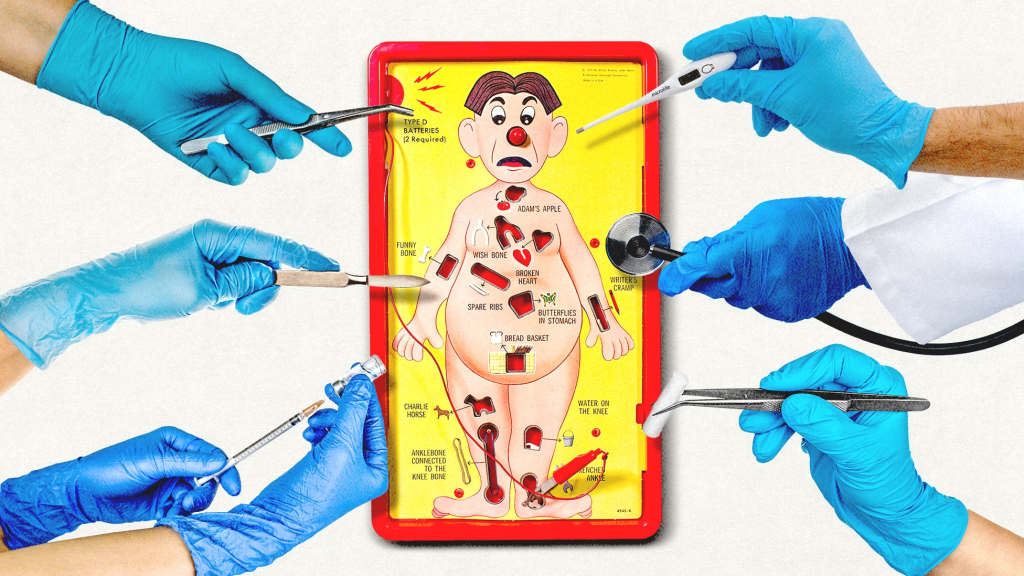
Medicine may allow us to challenge our genetic inheritance and repair insults to the brain, whether as Alzheimer's sufferers or moody, forgetful people and hazy thinkers 
 

 From my article in the July 13, 2009, issue of Newsweek (International Edition)

Daryl Kipke is showing off his company's latest prototype, a state-of-the-art electronic chip. It's not the sort likely to end up powering your iPod, but it does produce a beat you won't be able to get out of your head—because this device is designed to be surgically implanted deep in your brain, where the chip will deliver electric signals to specific clusters of cells.
   ...The progress in developing treatments for illnesses that ravage memory and thought raises an important question: might the same tools be used to improve the functioning of minds that by most standards are already running fairly smoothly? We may well be approaching an era of designer brains, in which those of us feeling a little foggy or dull can have our IQ, fast recall, and self-confidence ratcheted up via the prescription pad or scalpel..
...  read more


Billion Dollar Idea

The scientists at Emotiv have made a brain-wave-reading headset that lets you
conjure entire worlds using nothing but your mind.  Now comes the hard part
. 
 

 From my cover story in the December 2008 issue of Inc. Magazine

I’m sitting in a darkened room, attempting to move a large block with nothing but my thoughts. Move, damn you; I am your master. After a long moment, the block trembles a bit,
Inc. Magazine Cover Story on Emotivthen slowly skids toward me a few feet before stopping.
   Brain waves usually are monitored in hospitals or research labs, but I’m in a conference room at a company called Emotiv, where a few dozen scientists have developed a headset and software that quite literally reads my mind, allowing me play a sort of video game with nothing but sheer thought.  For $299, you and yours will very soon be able to vaporize onscreen enemies with an angry thought, have your online characters smile when you smile, and see video games react to your level of excitement. And that’s just for starters. Backed by some impressive partners, Emotiv has a long-range strategy that sounds like a business-school case study from the 22nd century
....  read more


Technological Innovation, Circa 2013

Quantum computers, memory-enhancing drugs, thought-
controlled games--Startling high-tech products are heading
our way
from companies you've never heard of. 
 

 From my article in the June 2008 issue of Inc. Magazine

...In conventional computing, bits are either on or off, representing a 0 or a 1. Quantum computers exploit a weird property of quantum mechanics that allows a bit to temporarily enjoy a dual reality where it is both on and off at the same time, thus embodying two numbers at once. Get these netherworldish qubits to interact with one another in the right way, and you've got a computer that can juggle trillions of numbers at the same instant instead of having to pore over them one by one. In theory, quantum computers will be able in the blink of an eye to crunch through problems that would bog down a conventional computer for hours. The speed will come in handy for things such as analyzing financial markets or recognizing would-be terrorists from vast national security databases.
...  read more


Testing Baby's Brain

Infants with early signs of autism respond well to
therapy.  Are health systems up to the task?
 

 From my article in the March 31, 2008, issue of Newsweek (International Edition)

...Despite a big jump in autism awareness in the past decade, parents, schools and doctors still frequently ignore warning signs in very young children. These can be subtle: a child never points at things, shows more interest in objects than people, has delayed speech and develops a fascination with spinning in place or with spinning toys. Many pediatricians dismiss these symptoms as harmless quirks that kids will outgrow. New research and experience in some autism clinics, however, suggests that starting treatment by age 2 is critical to mitigating and in some cases entirely avoiding the disorder.
   That's because unlike the brain of an adult or even an older child, a 12- or 18-month-old's brain is, in a sense, highly reprogrammable—that is, it responds well to treatments designed to permanently change basic patterns of thought and behavior. "All the evidence we have suggests that outcomes for these children will be better with an earlier diagnosis, before they reach 18 months, if possible," says Christopher Gillberg, a child psychiatrist at Gothenburg University in Sweden.
   Although there are currently no effective treatments for autism symptoms in older children or adults, the prospects are turning out to be entirely different for very young children who get prompt treatment
....  read more


Interview: Filmmaker/Author/Entrepreneur Charles Ferguson

An Oscar-nominated documentary director analyzes the
decision-making process that led the U.S. to war
 

 From my interview with Ferguson in the March 2008 issue of Inc. Magazine

...No End in Sight suggests that the administration unwisely ignored the experts' advice on Iraq. How do you know when to listen to experts and when not to?

One's ability to intelligently override the experts in making a decision depends on having a certain amount of experience. If you look at the Bush administration, in some cases the people making the decisions and ignoring the experts not only lacked experience with the issues specific to the Iraq war, but they had no experience running anything. Paul Bremer had been a staff guy for most of his career, and he was suddenly put in charge of running the gigantic Coalition Provisional Authority.

Tolerating dissent is another theme in the film. Is it wrong to want your team be in sync?

Internal critics may not be right most of the time, but they might have important things to say. If you punish anyone who disagrees with you--if it becomes suicidal for anyone in the organization to express concerns--then you end up with people who think in rigid ways or who just want to curry favor
....  read more


A Digital Makeover for the Modeling Business

How Ford Models became the hottest thing on YouTube
 

 From my cover story in the February 2008 issue of Inc. Magazine

Clothes made from recycled materials can, as it turns out, be a little itchy. Still, Jackie Stewart is 
determined to dwell on the positive, and so she is chatting engagingly about Inc. Magazine Cover Story on Ford Modelswhat she is wearing, a dress by designer Kate Goldwater constructed from scraps of fabric. She points out that in addition to striking a blow for mother earth, it fits well and is brightly colored. The dress does, in fact, look great on her, though Stewart, absurdly long-legged, breezily poised, and pretty in a way that somehow seems both Midwestern and exotic, would probably make a dress put together from inner tubes look smart.
  
Stewart is so comfortable talking up green style that it's easy to forget she is on a set being filmed, until director Damian Weyand interrupts to suggest she not flourish her arms to call attention to the dress. "It's a little too Price Is Right," he says. "We just want you to be Jackie, not spokesy."
   Just being Jackie isn't the sort of thing normally asked of Stewart. She's a professional model in the stable of Ford Models, the storied agency that for six decades has been a headquarters for many of the fashion world's most memorable faces....  read more


The Secret Life of a Serial CEO

Bob Cramer has piloted six companies to big paydays. Now he's found a start-up that offers something else--if only he can get the investors and founders to see things the same way.

From my cover story in the January 2008 issue of Inc. Magazine

Coming in out of the light drizzle to this pop-tony restaurant in this swell Boston suburb, Bob Cramer looks like a man whose burdens do not include doubt, regret, or second-guessing. He is both energetic and at ease, confident and engaging. He occasionally checks the incoming Inc. Cover Story on Bob Cramermessages on his Treo in an offhand way, as if he's doing so not out of need or concern, but rather out of mild curiosity and vestigial habit. He is trim and looks younger than his 48 years. He's dressed in a blazer over designer T-shirt and jeans--like a man who could afford to be in a $2,000 suit but wouldn't be caught dead in one. He's here to explain to me what he plans to do following the success of LiveVault. Cramer brought that online data-storage company to $20 million in sales; in December 2005, the company was acquired by Iron Mountain for more than $50 million. Cramer made a bundle on the deal. "I don't have to work," he says. "I can live off the interest." Now he's thinking that when he pounces on a new opportunity, it just might be on a start-up with a little more poetry to it than offline storage or database software. "I'd love to find something that I can personally relate to," he says. Meanwhile, he adds, glancing absently at his Treo, there is no need to rush to try to find the perfect company. He seems to have no idea that it has already found him....   read more


Searching For The Best Engine

A global effort is underway to invent a better way of finding
things on the Web. Could Google be vulnerable?


 From my cover story in the March 7, 2007, issue of Newsweek (International Edition)

....Despite spending billions trying to diversify beyond the straightforward search offered on its stripped-down, almost childlike home page, Google reaps about 60 percent of its outsized Newsweek Cover Story on Googlerevenues and more than 80 percent of its profits from ads on that page, according to analysts' estimates. That means the company's success continues to hinge on the dominance of its simple search. There are no guarantees that its dominance will last. It is threatened by a massive worldwide effort to build a better search, involving giant high-tech rivals, governments in Europe and Asia, and hundreds of tiny start-ups founded by academic wunderkinders much like Sergey Brin and Larry Page, the Stanford graduate students who founded Google in 1998. And it's also dependent on an online public that may make up the most fickle market in history, an audience whose interests are already showing signs of wandering outside the search box.....  read more


Sky King to the Planeless: Eat My Contrails

If you want complete freedom from airline schedules, you’ve pretty much got to own the plane, and fly it yourself

From my article in Xconomy, posted December 5, 2007

....Most privately piloted propeller planes are cramped four-seaters that top out around 140 mph or so, and tend to be either grounded or tossed around by any bad weather along the flight path. Marc Dulude started off with one of those—a Cessna Skylane—when he got his license in 2001, thinking his flying would be strictly personal. But then he upgraded to the roomy six-seat Piper Mirage, and had its piston engine replaced with a 560-horsepower turbine engine, essentially a jet engine that turns a propeller. Because the Mirage is pressurized, and because, unlike piston engines, turbine engines don’t lose power in the thinner air at altitude, it comfortably flies in the same 20,000-feet and up, above-the-bad-weather flight levels as jets. At 300 mph, the Mirage isn’t much slower than a business jet, either. That sort of aircraft can set you back 1.5 million bucks or more, but that’s still half the cost of a typical light business jet. Dulude’s operating costs are far lower than those of jets, too, and he can fly in to tiny airports close to his destination that couldn’t handle most jets....   read more


The Cost of Competence

In a fast-changing world, here's one more thing to worry about: being too good at what you do.

From my column in the September 2007 issue of Inc. Magazine

....Why is it that obviously talented leaders at companies that were once themselves whirlwinds of innovation often seem unable to respond to threats from new approaches? Actually, cognitive psychologists have known at least part of the answer for about half a century. When people get very good at doing things a certain way, they become surprisingly inept at learning new skills when changing conditions demand it. Numerous studies have demonstrated that novices have an easier time mastering new tasks than experts. In other words, getting very good at running your company can be a way of ensuring you'll do a lousy job of running it when new technology or business models dictate change....   read more


The Perils of Order

Being messy, both at home and in foreign policy, may have its own advantages

From my article in the March 5, 2007, issue of Newsweek (International edition)

....
If a nation has an especially strong, irrational bias toward order, it can follow that—just like office neat freaks frowning at messy cubicle owners—it will see less-ordered societies as defective and crying out for intervention. Two of the most order-loving societies in the world are Germany, where jaywalkers are berated by passersby and messiness is so unthinkable that there isn't even a unique word for it, and Japan, where people can be evicted from their homes for failing to sort their trash into 44 categories.
   Although the United States is a moderately messy nation, prizing diversity and tolerating political conflict within its borders, its leaders have always been made uneasy by turmoil or disorder elsewhere, causing them to pursue "stability" in other nations, often at high cost. That's typical of the way people look at messiness—it's someone else's mess that always seems most problematic....    read more


Mitchell Baker and the Firefox Paradox


Its products are free. Its work force is largely volunteer. Its meetings are open to anyone. It's a nonprofit. It may be the hottest tech company in America.

From my article in the February 2007 issue of Inc. Magazine

     ....As a mass of apparent contradictions, Mitchell Baker, 48, who leads Mozilla under the official title of Chief Lizard Wrangler, is a good fit for Mozilla--which is, after all, the profit-making arm of a nonprofit organization, a community-run company whose executives cut secret deals with big businesses, a 70-employee start-up that has threatened the ambitions of one of the world's corporate titans, and a well-funded company that depends mostly on unpaid enthusiasts to develop its software and to handle its marketing, customer support, even strategic planning. As whimsical as the title Lizard Wrangler may be, it's probably closer to the mark than "CEO" or any other term the conventional business world has to offer. "Baker and Mozilla are wrestling with new questions about the boundaries between communities and the corporation," says Siobhan O'Mahony, an assistant professor at Harvard Business School who studies new forms of organization. "She's creating a new management model based on engaging a business ecosystem." Baker, and the organization she leads, clearly are not much like what has come before them. But they may be a lot like what entrepreneurs and companies will become in the years ahead....     read more


A Messy Desk Means Something's Getting Done

Though we lionize neat-freaks, it's often the disorganized who are the most productive

From my article in the January 29, 2007, issue of The Los Angeles Times

....California Riverside County Superior Court Judge Robert G. Spitzer apparently let his orders sit unprocessed for months at a time in massive clutter, making him not essentially different from people we see all the time on "Oprah" and the morning news shows — suffocating, sometimes literally, in a sea of colorful detritus, their phones mewing distantly under a mound of old phone books and pizza boxes, until a professional organizer comes in and saves their lives.
   In watching these disturbing cases of mess gone wild, you probably see at least a bit of yourself. Chances are you struggle with mess and disorganization, and you suspect that you too are missing opportunities, being ineffective, wasting time and shortchanging others. You may well be told as much by the neater people around you, and you're certainly told so by a thriving industry of get-organized experts.
     When video of a sheriff's raid of Michael Jackson's ranch was shown in court, many news accounts focused on how messy the place was. What we've seen building over the last few decades is, in a sense, the near-criminalization of messiness....     read more


 Taskus Interruptus

Why interruption, distraction and multitasking aren't such terrible things after all

From my What's Next column in the February 2007 issue of Inc. Magazine

Hey, stupid. Yeah, that’s right, I’m talking to you. You might think that your e-mail, BlackBerry, smart phone, always-on Web connection, and ever-growing array of computer applications make you smarter and more efficient. But you’re wrong. Instead, all those shiny new tools make it impossible to concentrate on any one thing for more than a few minutes. And that is why you have become dumber and less effective. 
   Or so suggests a stream of recent studies. But does multitasking really impair our ability to get our jobs done?...   read more


Saying Yes to Mess

A movement is afoot to embrace disorder as the detritus of a creative mind

By Penelope Green, The New York Times, December 21, 2006

It is a truism of American life that we’re too darn messy, or we think we are, and we feel really bad about it. Our desks and dining room tables are awash with paper; our closets are bursting with clothes and sports equipment and old files; our laundry areas boil; our basements and garages seethe. And so do our partners — or our parents, if we happen to be teenagers.
   But contrarian voices can be heard in the wilderness. An anti-anticlutter movement is afoot, one that says yes to mess and urges you to embrace your disorder. Studies are piling up that show that messy desks are the vivid signatures of people with creative, limber minds (who reap higher salaries than those with neat “office landscapes”) and that messy closet owners are probably better parents and nicer and cooler than their tidier counterparts. It’s a movement that confirms what you have known, deep down, all along: really neat people are not avatars of the good life; they are humorless and inflexible prigs, and have way too much time on their hands.
   Last week David H. Freedman, an amiable mess analyst (and science journalist), stood bemused in front of the heathery tweed collapsible storage boxes with clear panels ($29.99) at the Container Store in Natick, Mass., and suggested that the main thing most people’s closets are brimming with is unused organizing equipment. “This is another wonderful trend,” Mr. Freedman said dryly, referring to the clear panels. “We’re going to lose the ability to put clutter away. Inside your storage box, you’d better be organized.”  Mr. Freedman is co-author, with Eric Abrahamson, of “A Perfect Mess: The Hidden Benefits of Disorder”....   read more


Go Ahead, Make a Mess

Are clutter, disorder and disorganization really the enemies of good managers?

From my article in the December 2006 issue of 
Inc. Magazine, adapted from A Perfect Mess

In the late 1950s Louis Strymish walked away from his budding career as a Harvard-trained chemist, borrowed a few thousand dollars from a friend, and opened a small bookstore outside of Boston.  An inveterate reader and eccentric who had to overcome severe dyslexia as a child, Strymish didn't think it worth the trouble to organize his store's wares into standard categories.  Instead, he just dumped the books from the publishers' boxes right onto the shelves, figuring buyers could hunt down the books they wanted by looking up the publisher, or simply by rummaging through the jammed, creaking bookcases.  It wasn't just the chintzy, cramped decor, complete with half-unpacked boxes and piles of unshelved books, that made the place look like a mess.  To the typical book-browser, the shelves seemed at first to be an undecodable hodge-podge.  But less sorting meant less staff, which translated to lower prices.  And then a funny thing happened: A lot of people discovered they liked hunting through a mess of oddly arranged books, and discovering several they never would have thought to look for....


The Idiocy of Crowds

Collaboration is the hottest buzzword in business today. Too bad it doesn't work.

From my What's Next column in the September 2006 issue of Inc. Magazine

Is there anyone more loathed in office culture than the autocratic decision maker who ignores the opinion of the group? It's Business 101: Get lots of input, put your heads together, reach a consensus. The primacy of groups and teamwork is so ingrained that we seldom stop to think about it anymore. Now in the age of instant messaging, wikis, social networking sites, and videoconferencing on cell phones, collaboration and consensus are gaining yet more currency. We can, and often do, get everyone to weigh in, all the time, whether it's by cell phone, e-mail, or instant message. As James Surowiecki nicely puts it in the title of his best-selling book, it's "the wisdom of crowds," and it's a glorious thing.
   Or it would be, if it weren't for just one little problem: The effectiveness of groups, teamwork, collaboration, and consensus is largely a myth. In many cases, individuals do much better on their own. Our bias toward groups is counterproductive. And the technology of ubiquitous connectedness is making the problem worse....  read more


        More articles